Enhancing Digital Communication with Isometric 3D Icons for Business, Finance, and Web Services
The Growing Role of Visual Elements in Digital Content
As digital platforms evolve, the need for clear, engaging visuals becomes more pronounced. Among the most effective visual tools are isometric 3D icons, especially those tailored to business, finance, and web services. These icons offer a unique blend of aesthetic appeal and functional clarity, making them indispensable in modern web and application design.
Understanding Isometric 3D Icons
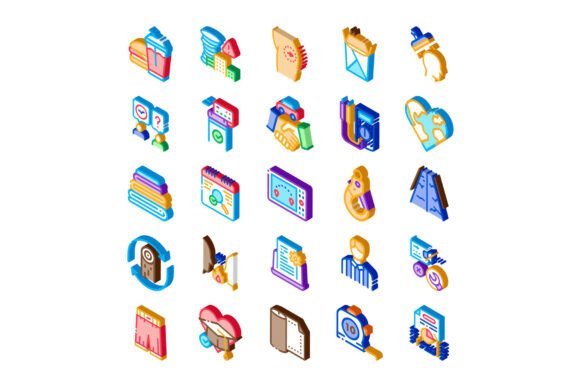
Isometric 3D icons are two-dimensional representations that simulate a three-dimensional perspective. Unlike traditional flat icons, these graphics provide depth and dimensionality, allowing users to perceive spatial relationships more naturally. The isometric style typically uses a 30-degree angle to project objects, creating a consistent and visually harmonious layout.
When applied to domains like business finance and web services, these icons can represent abstract concepts such as data flow, financial growth, cloud computing, and team collaboration in a visually digestible manner.
Why Use Isometric 3D Icons in Business and Finance Contexts?
The use of isometric 3D icons isn't just about aesthetics. These graphics serve a functional purpose by enhancing user comprehension and engagement across various digital platforms.
- Improved Visual Hierarchy: By using depth and perspective, isometric icons can guide users' attention to key elements within a layout.
- Consistency Across Themes: A well-designed collection of isometric 3D icons maintains a uniform style, making it easier to integrate into dashboards, presentations, and marketing materials.
- Scalability: These icons are often vector-based, allowing them to scale without losing quality on different screen sizes and resolutions.
- Emotional Engagement: Visual storytelling through isometric graphics can make data-heavy topics like finance more approachable and engaging.
Applications in Real-World Scenarios
Consider a financial dashboard that needs to convey complex metrics like revenue trends, market share, or investment flows. Using isometric 3D icons for each data point can help users quickly identify and interpret the information without relying heavily on text explanations.
Similarly, in web services, isometric icons can illustrate cloud infrastructure, API integrations, or cybersecurity protocols in a way that’s both informative and visually appealing. This is especially valuable for SaaS platforms, where onboarding users effectively is crucial.
Design Considerations for Implementing Isometric Icons
While the benefits are clear, successful implementation requires thoughtful design decisions. Here are a few key considerations:
- Color Consistency: Ensure that the color palette aligns with your brand identity and maintains contrast for readability.
- Style Uniformity: Mixing different icon styles can create visual clutter. Stick to a single isometric 3D icon collection that covers all necessary concepts.
- Contextual Relevance: Choose icons that clearly represent the intended concept. For example, a shopping cart icon should be unmistakable in an e-commerce context.
- Accessibility: Provide alt text and ensure sufficient color contrast for users with visual impairments.
Customization and Adaptability
One of the strengths of isometric 3D icons is their adaptability. Many design tools allow for easy customization of colors, sizes, and even the level of detail. Whether you're designing a mobile app interface or a corporate presentation, these icons can be tailored to fit the specific context without losing their visual integrity.
Moreover, as web and graphic design trends shift toward more immersive and interactive experiences, isometric icons can be animated or layered to create dynamic interfaces that respond to user actions.
Who Benefits Most from Using Isometric 3D Icon Sets?
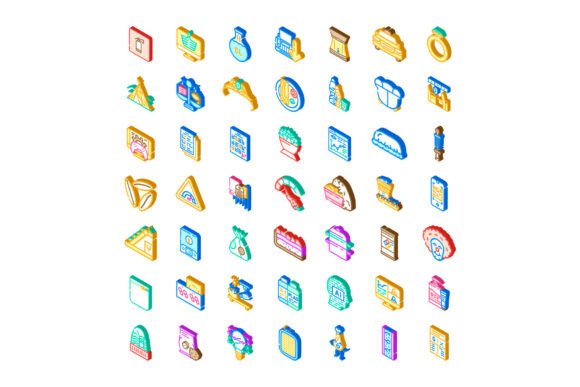
The versatility of isometric 3D icons covering business, finance, web services, marketing, lifestyle, and graphic design gadgets makes them valuable to a wide audience:
- Business Owners: Use these icons to enhance reports, dashboards, and marketing materials with professional visuals that simplify complex data.
- Web Developers: Integrate isometric icons into websites and applications to improve UI/UX and reduce cognitive load.
- Graphic Designers: Leverage these icons in presentations, infographics, and branding materials to add depth and modernity.
- Educators and Researchers: Visual learners benefit from the clarity these icons provide when explaining abstract concepts in economics, digital marketing, or software development.
- Content Creators: Whether for blogs, videos, or social media, isometric icons can make digital content more engaging and visually cohesive.
Use Case: E-Commerce Platform Redesign
An online marketplace decided to revamp its user interface to improve customer engagement. By incorporating a comprehensive isometric 3D icon set, the design team was able to replace generic flat icons with more expressive visuals that represented categories like shipping, payments, customer service, and product features.
The result was a 20% increase in time spent on the site and a 15% improvement in conversion rates. Users found the interface more intuitive and visually appealing, which directly contributed to the improved performance metrics.
Future Trends and Expanding Use Cases
As technology advances, the potential applications for isometric 3D icons in business finance and web services continue to grow. With the rise of virtual and augmented reality, these icons can serve as intuitive navigation elements in immersive environments.
Additionally, the trend toward minimalism in UI design doesn't mean simplicity at the cost of clarity. Isometric icons strike a balance between detail and minimalism, offering just enough visual richness to enhance understanding without overwhelming the user.
Integration with AI and Smart Interfaces
As AI-driven interfaces become more prevalent, isometric icons can help humanize complex systems. For example, a chatbot interface might use isometric icons to represent different service categories, making it easier for users to navigate without reading lengthy instructions.
In financial planning apps, isometric visuals can illustrate budget categories, investment portfolios, or risk assessments in a way that feels interactive and personalized.
Conclusion: The Value of a Comprehensive Icon Library
A well-curated collection of isometric 3D icons covering business, finance, web services, marketing, lifestyle, and graphic design gadgets is more than just a design asset—it's a strategic tool for communication, engagement, and user experience optimization.
Whether you're a developer, designer, business analyst, or educator, integrating these icons into your digital strategy can significantly enhance the clarity and impact of your content. As digital landscapes continue to evolve, the ability to convey complex information through intuitive visuals will remain a key differentiator for brands and platforms alike.